

Tokyo is often described as a futuristic city filled with glowing skyscrapers, crowded train stations, and fast-moving crowds. Yet hidden among the modern attractions lies a quieter side of the capital that preserves memories of old neighborhoods, traditional lifestyles, and everyday stories from another era. One of the finest places to experience this side of Japan is the “Shitamachi Museum“. Located near the peaceful Shinobazu Pond in Ueno, this cultural destination offers visitors a chance to step back in time and discover what ordinary life looked like in Tokyo generations ago.
The museum stands as a tribute to the spirit of downtown Tokyo, often referred to as “shitamachi.” This historic area was once home to merchants, artisans, laborers, and families who built strong communities through hard work and close relationships. While modern Tokyo continues to evolve rapidly, the museum protects the atmosphere and traditions that shaped the city’s identity for centuries.
Travelers who visit this location are often surprised by how personal and emotional the experience feels. Instead of focusing on famous rulers or dramatic historical events, the exhibits celebrate daily life. From tiny shops and family kitchens to handcrafted toys and neighborhood streets, every detail tells a human story. The result is a museum that feels warm, relatable, and deeply memorable.
Also Read: Yanaka Cemetery: A Surprisingly Enchanting Space
The Meaning Behind the Shitamachi Museum
The word “shitamachi” literally translates to “lower town,” a term that historically referred to the lowland districts of old Edo, which later became Tokyo. These districts developed near rivers and commercial centers where merchants and craftsmen lived and worked. Over time, the area became known for its lively markets, festivals, and tightly connected communities. The Shitamachi Museum was created to preserve this important cultural identity before it disappeared beneath urban development.
Unlike grand historical museums that focus heavily on politics or warfare, this museum highlights the routines and traditions of ordinary people. Visitors quickly notice how the displays emphasize simple but meaningful aspects of life such as cooking, shopping, craftsmanship, and seasonal celebrations. This approach creates a strong emotional connection because it reflects experiences shared by families across generations.
The museum also helps younger audiences understand how dramatically Tokyo has changed over the past century. Many of the objects on display once served practical purposes in homes and businesses but now appear unfamiliar in a digital age. By preserving these items and presenting them in realistic settings, the museum bridges the gap between the past and present in a highly engaging way.
A Walk Through Old Tokyo Streets
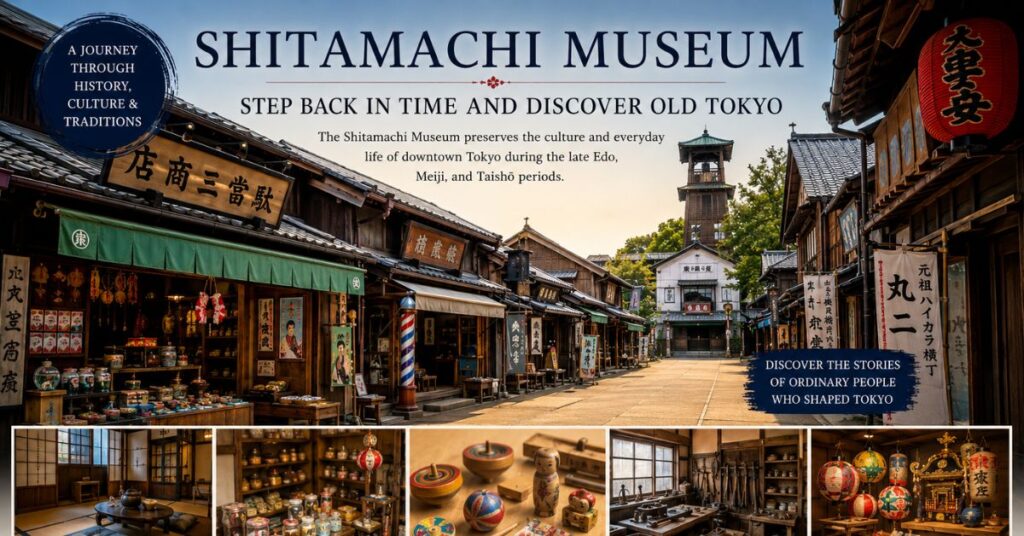
One of the most impressive features inside the Shitamachi Museum is the life-sized recreation of a traditional downtown street. As visitors enter the exhibit area, they immediately feel transported into another time. Wooden storefronts, lanterns, narrow pathways, and carefully arranged household items create an atmosphere that feels authentic rather than staged.
The recreated street includes homes, workshops, and local businesses that represent the daily rhythm of old Tokyo neighborhoods. Small details such as handwritten signs, woven baskets, and old-fashioned tools reveal how much craftsmanship shaped ordinary life. Instead of simply observing artifacts behind glass, visitors can explore spaces that feel lived in and realistic.
This immersive design makes the museum especially appealing for travelers who want more than textbook history. Walking through the exhibits encourages imagination and curiosity. Guests can easily picture children playing in the streets, shopkeepers greeting customers, and families gathering around evening meals. The experience transforms historical information into something vivid and emotionally meaningful.
Traditional Homes and Everyday Living
The museum’s recreated homes provide a fascinating glimpse into domestic life during the late nineteenth and early twentieth centuries. These homes were typically small but carefully organized to maximize space and comfort. Tatami flooring, sliding paper doors, and low furniture demonstrate the practical elegance that became associated with Japanese interior design.
Daily life required discipline, creativity, and cooperation among family members. Kitchens were simple compared to modern standards, yet every tool served an important purpose. Cooking equipment, storage containers, and heating devices displayed in the museum reveal how households adapted to changing seasons and limited resources. Visitors often gain a new appreciation for the effort required to maintain everyday routines in earlier times.
Another remarkable aspect of these exhibits is the strong sense of community they represent. Neighbors interacted frequently, shared responsibilities, and supported one another during festivals or difficult periods. The museum successfully captures this spirit by presenting homes not as isolated spaces but as parts of a vibrant social environment where relationships mattered deeply.
Also Read: Breathtaking Mohri Garden Pond Creates Calm Escape
Cultural Traditions Preserved Through Exhibits
The Shitamachi Museum does more than display historical objects because it also preserves traditions connected to festivals, entertainment, and local customs. Seasonal celebrations played a major role in downtown Tokyo life, bringing residents together through music, decorations, and community gatherings. The exhibits showcase festival items such as lanterns, traditional clothing, and handcrafted ornaments that reveal the joy and creativity of these events.
Children’s toys and games form another memorable part of the museum experience. Before smartphones and electronic entertainment, children relied on imagination and handmade objects for fun. Traditional spinning tops, paper crafts, and wooden toys reflect a simpler style of play that encouraged social interaction and creativity. These exhibits often inspire nostalgia among older visitors while fascinating younger generations.
The museum also honors the importance of craftsmanship in Japanese culture. Skilled artisans once produced everyday goods by hand using techniques passed down through generations. Displays featuring carpentry tools, sewing materials, and workshop equipment highlight the dedication and patience required to create durable, functional products. This focus on craftsmanship reminds visitors that beauty can exist even in ordinary objects designed for daily use.
The Historical Importance of Downtown Tokyo
Downtown Tokyo played a central role in the growth of the city during the Edo and Meiji periods. Merchants and craftsmen contributed significantly to the economy, while local neighborhoods became centers of cultural expression. The values associated with these communities, including resilience, hospitality, and hard work, continue to influence Japanese society today.
The devastating events of the twentieth century transformed many of these historic areas. Earthquakes, war damage, and rapid modernization changed the appearance of old neighborhoods forever. As traditional buildings disappeared, concerns grew about preserving the memory of everyday life in earlier Tokyo. The establishment of the museum became part of a larger effort to protect cultural heritage before it vanished completely.
Today, the museum serves not only as a tourist attraction but also as an educational institution. Students, researchers, and international visitors all benefit from its detailed presentation of urban history. By focusing on ordinary people rather than famous leaders, the museum provides a broader understanding of how societies function and evolve over time.
Why Visitors Find the Museum So Memorable
Many travelers describe their visit to the Shitamachi Museum as surprisingly emotional. The exhibits feel personal because they focus on universal human experiences such as family life, work, childhood, and community. Even visitors unfamiliar with Japanese history often connect deeply with the stories represented through the displays.
The museum’s smaller size also contributes to its charm. Unlike enormous institutions where visitors may feel overwhelmed, this museum creates an intimate atmosphere that encourages slow exploration. Guests can spend time noticing details, asking questions, and appreciating the craftsmanship behind each exhibit. This relaxed pace allows the historical environment to feel more immersive and authentic.
Another reason for the museum’s popularity is its location near Ueno Park. After exploring the exhibits, visitors can enjoy peaceful walks around the pond, nearby temples, or seasonal cherry blossoms. This combination of cultural discovery and natural beauty creates a balanced and memorable experience that appeals to both history enthusiasts and casual travelers.
Important Highlights Inside the Museum
The museum contains several notable exhibits that consistently attract attention from visitors. Each section contributes to a deeper understanding of life in old Tokyo while presenting history in an engaging and accessible manner.
| Exhibit Area | Main Attraction | Cultural Importance |
|---|---|---|
| Traditional Street | Recreated downtown pathway | Demonstrates neighborhood life |
| Merchant Shop | Historic business setting | Shows local commerce and trade |
| Family Home | Authentic living space | Explains domestic routines |
| Toy Collection | Handmade children’s toys | Reflects cultural entertainment |
| Artisan Workshop | Traditional tools and crafts | Preserves craftsmanship heritage |
These exhibits work together to create a complete portrait of downtown culture. Rather than presenting isolated artifacts, the museum arranges objects within realistic settings that encourage visitors to imagine how people once lived and interacted. This storytelling approach makes the historical information easier to understand and remember.
Photography opportunities throughout the museum also help visitors engage more personally with the experience. The detailed recreations allow travelers to capture images that feel immersive and atmospheric. As a result, many guests leave with a stronger emotional connection to Tokyo’s past than they expected before entering.
The Role of Preservation in Modern Japan
Japan is known worldwide for balancing tradition with innovation. Modern cities feature advanced technology and futuristic architecture, yet cultural preservation remains highly valued. The Shitamachi Museum represents this balance by protecting memories of earlier lifestyles while existing within one of the world’s most modern urban environments.
Preservation efforts like this are important because they maintain connections between generations. Without museums and cultural institutions, younger people might struggle to understand how their ancestors lived or what values shaped earlier communities. Historical preservation creates continuity that helps societies maintain identity even during rapid change.
The museum also encourages reflection about the pace of modern life. Many visitors leave with a renewed appreciation for simplicity, craftsmanship, and human connection. While technological progress brings convenience, the exhibits remind people that strong communities and meaningful traditions are equally valuable aspects of society.
Also Read: Omoide Yokocho: A Stunning Journey Through Old Tokyo
Experiencing the Atmosphere Around the Museum
The surrounding area contributes greatly to the overall experience of visiting the museum. Located near Ueno Park, the environment combines cultural richness with natural beauty. Seasonal scenery changes throughout the year, offering cherry blossoms in spring, lush greenery in summer, colorful leaves in autumn, and peaceful landscapes during winter.
Nearby streets also preserve elements of traditional Tokyo charm. Small restaurants, family-owned shops, and local markets provide opportunities to continue exploring downtown culture after leaving the museum. Many visitors enjoy combining their trip with traditional Japanese meals or visits to nearby temples and historical landmarks.
The atmosphere around the museum feels calmer than many other parts of Tokyo. While famous shopping districts can feel crowded and intense, this area invites slower exploration and quiet observation. This relaxed setting complements the museum’s themes perfectly, allowing visitors to absorb the historical experience more fully.
How the Museum Appeals to International Visitors
International travelers often seek experiences that reveal the authentic character of a destination rather than only its modern attractions. The Shitamachi Museum fulfills this desire by offering insight into the social and cultural foundations of Tokyo. Visitors gain a deeper understanding of Japanese values through the museum’s focus on community, craftsmanship, and everyday life.
Language barriers rarely prevent enjoyment because the visual storytelling is highly effective. Even without detailed explanations, visitors can understand the purpose of many exhibits through observation and imagination. The recreated environments communicate emotion and atmosphere in ways that transcend language differences.
Many foreign travelers also appreciate how the museum contrasts with their expectations of Tokyo. Instead of neon lights and futuristic technology, they encounter wooden buildings, handcrafted objects, and stories of ordinary families. This contrast creates a richer and more balanced understanding of Japan as a country where history and modernity coexist side by side.
Conclusion
The Shitamachi Museum offers far more than a simple history lesson. It provides an intimate journey into the heart of old Tokyo, revealing the daily lives, traditions, and relationships that shaped the city long before skyscrapers dominated the skyline. Through immersive exhibits, authentic recreations, and carefully preserved artifacts, the museum captures the warmth and resilience of downtown communities that once formed the cultural backbone of Tokyo.
What makes this destination especially meaningful is its focus on ordinary people. Rather than celebrating only famous leaders or dramatic events, the museum honors shopkeepers, craftsmen, children, and families whose experiences reflected the true spirit of the city. This human-centered approach allows visitors from around the world to connect emotionally with the past in a natural and memorable way.
In an era defined by rapid technological advancement, places like the Shitamachi Museum remind us of the importance of preserving cultural memory. They encourage reflection on the values of simplicity, creativity, and community that continue to influence modern society. Whether you are passionate about Japanese history or simply curious about traditional urban life, a visit to this museum offers an enriching experience that lingers long after the journey ends.
FAQs
1. What is the Shitamachi Museum famous for?
The museum is famous for recreating traditional downtown Tokyo life through realistic streets, homes, shops, and cultural exhibits.
2. Where is the Shitamachi Museum located?
It is located near Shinobazu Pond in Ueno Park, Tokyo, Japan.
3. What can visitors see inside the museum?
Visitors can explore recreated homes, merchant shops, artisan workshops, traditional toys, and historical household items.
4. Is the museum suitable for families?
Yes, the museum is family-friendly and enjoyable for both children and adults because of its interactive and visual exhibits.
5. Why is downtown Tokyo culture important?
Downtown Tokyo culture reflects the traditions, values, and community spirit that helped shape the identity of modern Tokyo.