
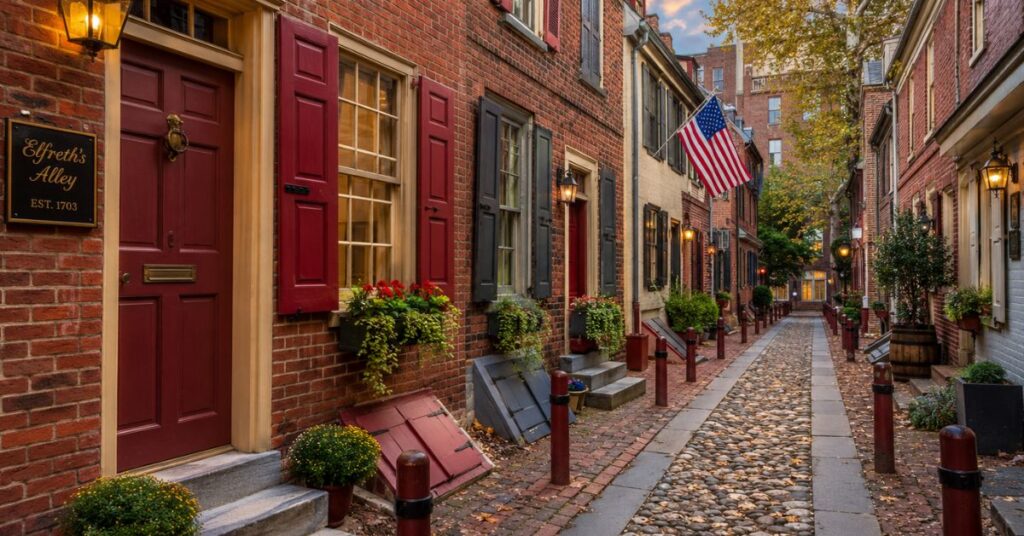

Few places in the United States capture the spirit of early American life as beautifully as Elfreth’s Alley. Tucked away in the heart of Philadelphia, this narrow cobblestone street offers visitors a rare opportunity to step into the past while remaining surrounded by the energy of a modern city. The alley is widely celebrated for its preserved colonial homes, quiet atmosphere, and remarkable connection to the country’s beginnings. Walking through the street feels less like visiting a tourist attraction and more like entering a living piece of history.
The charm of the alley comes not only from its age but also from its authenticity. Unlike recreated historical sites, this street has remained continuously inhabited for centuries. Many of the homes still serve as private residences, giving the area a genuine sense of life and continuity. Every brick wall, wooden shutter, and narrow pathway tells a story about the generations who once lived and worked there.
Visitors from around the world travel to Philadelphia to experience the unique atmosphere of this famous lane. Historians admire its preservation, photographers love its visual appeal, and travelers appreciate its peaceful setting amid the busy city streets. Whether someone is passionate about architecture, American history, or cultural heritage, the alley leaves a lasting impression that continues long after the visit ends.
The Origins of Elfreth’s Alley
The story of Elfreth’s Alley began in the early eighteenth century when Philadelphia was rapidly growing into an important colonial city. Merchants, craftsmen, and laborers needed practical residential spaces close to the bustling waterfront and commercial districts. The alley was created as a small residential lane where working-class families could live near their trades and businesses. This practical beginning shaped the character of the neighborhood for generations.
The street received its name from Jeremiah Elfreth, a blacksmith and property owner who became an influential figure in the area during the colonial era. Although he did not create the alley himself, his connection to the neighborhood became strong enough for the street to permanently bear his name. Over time, the alley became home to artisans such as shoemakers, cabinetmakers, and shipbuilders who contributed to the city’s economic growth.
As Philadelphia expanded and modernized, many historic streets disappeared or changed dramatically. Remarkably, this narrow lane survived urban development, industrial changes, and shifting architectural trends. Residents and preservationists recognized its cultural value early enough to protect it from demolition. Their efforts ensured that future generations could continue experiencing one of America’s oldest residential streets in its near-original form.
Architectural Beauty and Colonial Design
One of the most captivating aspects of Elfreth’s Alley is its architecture. The homes lining the street showcase a variety of colonial and Georgian design styles that reflect the tastes and building methods of the eighteenth and nineteenth centuries. Their brick exteriors, decorative doorways, and traditional windows create a timeless appearance that immediately transports visitors into another era.
The narrow dimensions of the houses reveal how efficiently space was used in colonial cities. Many homes were designed to accommodate both family living and small businesses under the same roof. Shopkeepers often worked on the ground floor while their families lived upstairs. This blend of residential and commercial life created a lively community atmosphere that defined urban colonial neighborhoods.
Despite centuries of weather and city development, many original architectural details remain carefully preserved. Wooden shutters, steep rooflines, and handcrafted brickwork continue to reflect the craftsmanship of early builders. Preservation organizations and homeowners have worked diligently to maintain the historical integrity of the street while allowing the homes to remain functional for modern living.
| Feature | Description |
|---|---|
| Established | Early 1700s |
| Location | Philadelphia, Pennsylvania |
| Architectural Style | Colonial and Georgian |
| Famous For | Oldest continuously inhabited residential street |
| Main Attraction | Historic homes and cobblestone pathways |
| Visitor Experience | Walking tours, museum houses, photography |
Life in Colonial Philadelphia
During the colonial period, life in Philadelphia was filled with hard work, trade, and community interaction. Residents of the alley represented the growing middle and working classes that played a major role in the city’s development. Craftsmen and merchants worked long hours to support their families while contributing to the local economy through skilled labor and commerce.
Daily life in the neighborhood revolved around practical routines. Families relied on nearby markets for food, collected water from communal sources, and depended on neighbors for social connection and support. Children often learned trades from parents or apprenticeships, creating strong traditions that passed from one generation to another. The alley became a place where relationships and livelihoods were closely connected.
The proximity of the street to important political and economic centers also meant residents lived near major historical events. Philadelphia served as a central location during the American Revolution and the founding of the United States. While famous leaders shaped national decisions nearby, ordinary citizens in neighborhoods like this one experienced the realities of colonial urban life firsthand.
Preservation Efforts Through the Years
Preserving historic neighborhoods is never easy, especially in rapidly developing cities. By the late nineteenth century, many Americans began recognizing the importance of protecting historic structures before modernization erased them completely. Concerned citizens and historians saw immense value in safeguarding the alley’s buildings and atmosphere for future generations.
In the early twentieth century, organized preservation efforts gained momentum. Community leaders worked to restore deteriorating homes and prevent demolition projects that threatened the neighborhood’s character. Their dedication eventually led to broader recognition of the alley as a nationally important historical site. Preservation organizations carefully balanced historical accuracy with the practical needs of current residents.
These restoration efforts continue today as caretakers maintain the delicate balance between tourism and residential life. Modern infrastructure has been added carefully to avoid damaging the street’s historical appearance. Thanks to decades of commitment and respect for heritage, visitors can still enjoy an authentic glimpse into early American urban living.
Why Visitors Love the Historic Street of Elfreth’s Alley
Travelers are often drawn to places that feel genuine and emotionally engaging, and Elfreth’s Alley delivers both experiences beautifully. The moment visitors step onto the cobblestones, they notice a striking contrast between the quiet alley and the surrounding city streets. This peaceful atmosphere creates a sense of calm that encourages slow exploration and reflection.
The visual appeal of the street also makes it one of Philadelphia’s most photographed locations. Seasonal decorations, flower boxes, and historic facades create scenes that look almost cinematic. During autumn and winter especially, the alley takes on a particularly magical quality that attracts photographers, artists, and history enthusiasts from around the world.
Another reason visitors appreciate the area is the personal connection it offers to history. Museums and monuments can sometimes feel distant or formal, but walking through a lived-in historic neighborhood feels intimate and relatable. Guests can easily imagine families cooking meals, children playing, and craftsmen working within the same walls centuries ago.
Cultural Importance in American History of Elfreth’s Alley
The significance of Elfreth’s Alley extends beyond architecture and tourism. The street represents the experiences of ordinary people whose lives helped shape early American society. While national history often focuses on political leaders and military events, neighborhoods like this one reveal the daily realities of working-class colonial communities.
The alley also highlights the diversity of colonial urban life. Residents came from different backgrounds, trades, and cultural traditions, contributing to Philadelphia’s reputation as a vibrant and economically active city. This mix of cultures and professions helped establish the city as one of the most important urban centers in early America.
Today, educators and historians use the alley to teach broader lessons about urban development, preservation, and social history. Students visiting the area gain a more personal understanding of the colonial period by observing the spaces where ordinary citizens lived their everyday lives. This human connection makes history feel more immediate and meaningful.
The Museum Experience and Guided Tours of Elfreth’s Alley
One of the highlights for visitors is the museum experience offered within the historic district. Several restored homes allow guests to explore carefully recreated interiors filled with period furniture, household items, and historical artifacts. These exhibits provide valuable insight into how families once lived within the narrow brick homes.
Guided tours help bring the stories of the residents to life. Knowledgeable guides share fascinating details about tradespeople, immigrant families, and historical events connected to the neighborhood. Instead of presenting history as distant facts, the tours focus on personal stories that make the past feel vivid and relatable.
Special events throughout the year also enhance the visitor experience. Holiday celebrations, seasonal decorations, and historical reenactments create opportunities for guests to engage with the site in memorable ways. These activities strengthen the connection between the community, the residents, and the broader public who continue to admire the alley’s enduring charm.
Modern Relevance and Urban Identity of Elfreth’s Alley
Even in the modern era, Elfreth’s Alley remains highly relevant to discussions about heritage and city identity. As cities continue to grow and redevelop, historic neighborhoods serve as reminders of the importance of preserving cultural memory. The alley demonstrates that old communities can continue thriving while coexisting alongside contemporary urban life.
The street also contributes significantly to Philadelphia’s cultural image. Visitors often associate the city with foundational moments in American history, and the alley strengthens that connection by offering a visible link to the colonial era. Its preservation enhances the city’s appeal as a destination for cultural tourism and educational travel.
For local residents, the neighborhood represents pride, continuity, and historical awareness. Living in or near such a famous location creates a unique relationship between past and present. The continued care shown by homeowners and preservation groups reflects a shared understanding that cultural landmarks hold value beyond simple real estate or tourism revenue.
Photography and Seasonal Atmosphere
Photographers frequently describe Elfreth’s Alley as one of the most visually charming streets in America. The combination of brick architecture, narrow walkways, and historic details creates endlessly appealing compositions. Morning sunlight and evening shadows add depth and texture that make every season feel unique.
Spring and summer bring that make every season feel unique.
Spring and summer bring colorful flowers and greenery that soften the colonial architecture with natural beauty. Window boxes filled with blooms create vibrant scenes that contrast beautifully with the aged brick walls. During these warmer months, the street feels lively yet peaceful, attracting both tourists and local visitors.
Autumn and winter transform the alley into an especially enchanting setting. Fallen leaves, festive decorations, and glowing lights create a warm and nostalgic atmosphere. Holiday events held in the neighborhood often draw large crowds eager to experience the street’s historic charm during the most picturesque times of the year.
Conclusion
Elfreth’s Alley stands as one of America’s most treasured historic streets because it preserves more than buildings alone. It protects stories, traditions, and everyday experiences that shaped the nation during its earliest years. Walking through the alley offers a rare chance to connect with the past in a direct and meaningful way that textbooks and photographs cannot fully capture.
The enduring beauty of the street comes from its authenticity. Unlike reconstructed attractions, this neighborhood has remained alive through centuries of change, continuously inhabited by generations of residents. Its cobblestones, brick homes, and narrow pathways remind visitors that history is not only found in grand monuments but also in the ordinary places where people lived their daily lives.
As cities around the world continue modernizing, places like this become increasingly valuable. They provide continuity, identity, and cultural memory within rapidly changing urban environments. Elfreth’s Alley remains a symbol of resilience, preservation, and historical appreciation, ensuring that future generations can continue exploring and learning from America’s colonial heritage.
FAQs
1. Where is Elfreth’s Alley located?
Elfreth’s Alley is located in the Old City neighborhood of Philadelphia, Pennsylvania.
2. Why is Elfreth’s Alley famous?
It is famous for being considered the oldest continuously inhabited residential street in the United States.
3. Can visitors tour the homes on the street?
Yes, certain homes operate as museum spaces where visitors can explore historical interiors and exhibits.
4. Is Elfreth’s Alley free to visit?
Walking through the alley is generally free, although museum tours and special events may require admission fees.
5. What is the best time to visit Elfreth’s Alley?
Many visitors enjoy autumn and winter because seasonal decorations and cooler weather create a particularly charming atmosphere.