
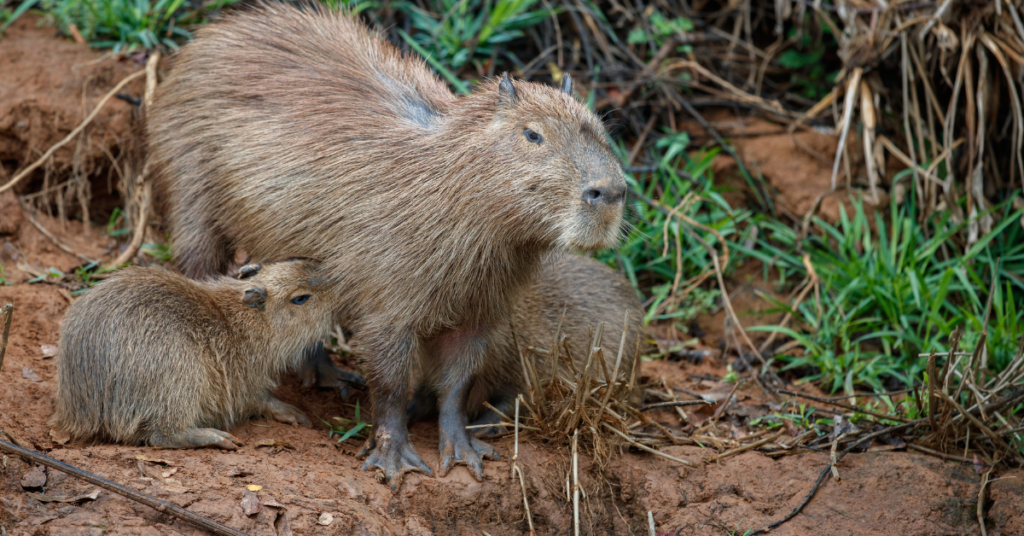

Recently, the word “Cadibara” has become a hot topic all over the search engines and social networks, leaving people wondering what it might mean. It looks like a strange, rare animal, a new scientific breakthrough, or a fantasy concept. But “Cadibara” is just an ordinary spelling error of the familiar animal “Capybara”. It’s all because information spread extremely quickly over the internet, making the word susceptible to typological mistakes or pronunciation error.
People who search for “Cadibara” usually have an interest in capybara but they don’t know its correct spelling. However, such error created a new persona for the Capybara’s searches, despite having no biological, linguistic or even cultural identity at all. Its appearance has demonstrated the power of the digital era in modifying our language.
Understanding this misunderstanding is essential as it helps distinguish the truth from accident. Although “Cadibara” itself doesn’t mean anything real, the animal it is refering to is one of the most fascinating animals we have ever encountered in nature.
What actually was Cadibara:
Capybara is an ordinary rodent scientifically known as Hydrochoerus hydrochaeris. Capybara is known to be the largest living rodent species on earth. They are widely distributed in the regions of South America.
Capybaras are herbivores by nature, feeding on grasses and aquatic plants. Their digestive system has been perfectly evolved to extract as much nutrients as possible from fiber-rich plants. They are also an important creature in the ecosystem due to their diet and habitat-keeping the number of vegetation in wetland ecosystem to a certain balance. They promote biodiversity by their presence.
The Capybara’s high level of social interaction is not common among rodents. They normally live in groups which offer protection, enable better communication as well as co-operations. A group usually has multiple adults with the young ones and is composed of many harmonious relationships. It is also one of the most admired reasons for the animal being so popular worldwide.
How has Cadibara gained popularity:
The increasing amount of people seeking for capybara on the internet have brought “Cadibara” up to the popularity. Since many images and videos on the Capybara and its amazing traits have already spread across the internet and become a hit, many are looking for related information on them. However, not everyone knows its accurate spellings, leading to repeated use of the misspelt version of Capybara.
Its similarity of sound when pronounced has contributed to the rise in “Cadibara” search trend. If someone has heard the word but never read it before, they will naturally spell out the words based on how they sound. Since Capybara is not part of everyone’s vocabulary, misspellings like “Cadibara” are bound to appear in this situation, creating a search trend that exists beyond its original meaning.
Also, the factor of digital repeat has made “Cadibara” become a widely known yet misspelled word. Once it gets popular, its spelling starts to be repeated by many and becomes a commonly used.
Science background of the Capybara:
The Capybara, belonging to the family of rodents, has a close relation with guinea pig and rock cavy. Scientific researches and molecular studies in genetics have further clarify their classifications in a family of Herbivorous mammals evolved for the adaptation of the natural environments.
The Capybara is technically classified as semi-aquatic animal that could exist and act equally well both on land and on water. Webbed paws and elongated toes have make them an excellent swimmers. The location of the animal’s eyes, ears and nose high on their faces have enable the Capybara to remain highly alert when they swim in the water. It is extremely adaptive animal in the wetlands.
Capybara also possesses a long history of evolution. Based on fossil records, the ancestors of Capybara were more diverse than today’s population, have appeared in variety of species. Later, due to the impact of climate and land formations change, only the species that are extremely adapted in the South American region remain till now.
Information About Capybaras
| Feature | Details |
|---|---|
| Scientific Name | Hydrochoerus hydrochaeris |
| Habitat | Wetlands, rivers, and grassy regions in South America |
| Diet | Grasses and aquatic plants |
| Social Structure | Groups of 10–20 individuals |
| Weight Range | 35–65 kg |
| Lifespan | 8–10 years in the wild |
Cultural significance of Cadibara confusion.
“Cadibara” itself has shown how digital culture has its unexpected effects on language. In a number of cases, incorrectly spelled names have also gained recognition as a result of repeated sharing over the internet, which would then be a clear example of how information may be spread.
Capybaras have also gained cultural fame as a source of relaxation and calm as a result of their slow demeanor, leading to it being a part of popular memes or comforting content over the internet, which also translates into incorrect spellings gaining attention merely due to the animal.
This kind of influence can prove how quickly language can evolve, from scientific names that must be maintained, to social behaviors where things that may appear incorrect or have less logic can be translated over to everyday use through interest.
To summarize.
“Cadibara,” despite its seemingly obscure nature, is essentially a misspelled capybara. It does not refer to a separate animal species, concept, or definition. It is through the usage of the correct term that we may gain understanding on this interesting species that forms the center of confusion.
Capybaras themselves are unique species of rodents that are characterized by their extremely calm and placid temperaments, as well as their social structures and importance in their ecological role. Removing this misperception helps in not only retaining accuracy, but also explaining why such errors can arise. “Cadibara” truly serves as a form of reminding us of how language evolves online through a merge of errors, trend-interest and curiosity.