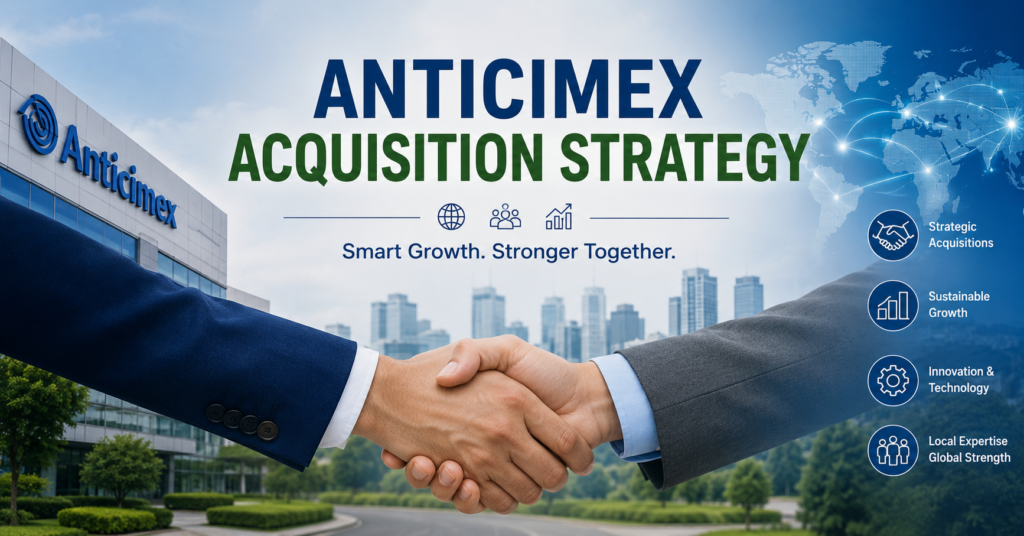

Modern business growth rarely happens by accident. Behind every successful international company is a carefully planned strategy that guides expansion, strengthens market position, and builds long-term value. One approach that has attracted attention in recent years is Anticimex Förvärvsstrateg, a term connected to the Swedish company Anticimex and its method of growing through acquisitions and strategic partnerships.
Anticimex has evolved from a regional pest-control company into a global service organization operating across multiple countries. Its expansion did not happen overnight. The company consistently focused on identifying promising businesses, entering new markets, and combining local expertise with modern technology. This steady and disciplined process became a defining characteristic of its business model.
Many business analysts view this strategy as a strong example of sustainable corporate expansion. Rather than relying only on aggressive advertising or short-term gains, Anticimex focused on long-term operational improvement and customer trust. Understanding how this strategy works offers valuable insight into modern international business development and the growing importance of strategic acquisitions in competitive industries.
Also Read: Peitner: The Remarkable Rise of a Modern Idea
Understanding Anticimex Förvärvsstrateg
Anticimex Förvärvsstrateg refers to the acquisition-focused growth model used by Anticimex to strengthen its position in global markets. The Swedish word “förvärvsstrategi” translates to “acquisition strategy,” which reflects the company’s emphasis on expanding by purchasing or partnering with established local businesses. This method allows the organization to enter new regions while benefiting from existing customer relationships and market experience.
The strategy is not simply about buying companies for rapid growth. Anticimex carefully evaluates businesses that align with its long-term vision and service standards. Instead of replacing local operations entirely, the company often integrates acquired firms gradually, preserving regional knowledge while introducing improved technology and management systems. This balanced approach helps maintain customer loyalty and operational stability.
Over time, this expansion model helped Anticimex create a broad international presence. By combining local expertise with centralized innovation, the company managed to remain adaptable in changing markets. The approach also reduced some of the risks associated with entering unfamiliar territories because acquired businesses already understood local regulations, customer expectations, and industry challenges.
The Origins of the Company’s Expansion Model
Anticimex began as a pest-control business in Sweden and gradually expanded into a larger environmental services organization. In its early years, the company focused heavily on practical customer service and preventive solutions. As demand increased, leadership recognized that long-term growth required more than organic expansion. Acquisitions became a logical path toward reaching new markets quickly and efficiently.
The company’s leadership understood that local businesses often possess valuable community trust and operational experience. Instead of building entirely new branches in every country, Anticimex chose to work with companies that already had strong reputations. This approach created smoother market entry while reducing the challenges commonly faced by international corporations entering unfamiliar regions.
As the company expanded into Europe, North America, Asia, and other regions, the acquisition strategy became more refined. Anticimex developed systems for integrating newly acquired companies while preserving service quality. This evolution transformed the business from a regional service provider into a globally recognized organization with a strong emphasis on innovation and sustainability.
Why Acquisitions Became Central to Growth
Acquisitions offer several advantages for companies seeking rapid but stable expansion. For Anticimex, buying established businesses provided immediate access to customers, infrastructure, and experienced staff. Instead of spending years building a new brand presence in each region, the company could enter markets with a functioning operational foundation already in place.
Another important factor was speed. Competitive industries often reward companies that can adapt quickly to changing market conditions. Through acquisitions, Anticimex gained the ability to respond rapidly to opportunities in different countries. This flexibility allowed the organization to strengthen its global reach without relying solely on slower internal growth methods.
The strategy also encouraged innovation. Each acquired company brought unique experiences, techniques, and operational insights. Anticimex used this diversity to improve its own systems and introduce better services across multiple markets. In many cases, local knowledge combined with corporate resources created stronger solutions than either side could have achieved independently.
How Technology Supports Anticimex Förvärvsstrateg
Technology plays a major role in the company’s long-term vision. Anticimex moved beyond traditional pest control by investing in smart monitoring systems, digital inspections, and data-driven preventive solutions. These innovations allowed the business to provide more efficient services while improving customer confidence and operational accuracy.
When Anticimex acquires a company, technology integration often becomes one of the first priorities. Newly joined businesses gain access to modern digital tools that improve reporting, communication, and service management. This creates consistency across international operations while helping local teams work more effectively in their specific markets.
The use of advanced monitoring systems also strengthened the company’s reputation as a forward-thinking organization. Customers increasingly prefer preventive and environmentally conscious solutions instead of reactive treatments alone. By combining acquisitions with innovation, Anticimex positioned itself as both a service provider and a technology-driven company prepared for future industry changes.
The Global Reach of the Strategy
One of the most impressive aspects of Anticimex Förvärvsstrateg is its international scale. The company expanded far beyond Sweden and established operations in multiple regions around the world. This growth allowed Anticimex to diversify its market presence and reduce dependence on any single economy or customer base.
International expansion also created opportunities for knowledge sharing between markets. Different countries often face unique environmental and pest-related challenges. Through its global network, Anticimex could apply successful methods developed in one region to solve problems in another. This exchange of expertise strengthened service quality across the organization.
Despite operating globally, the company maintained a strong focus on local understanding. Rather than applying identical solutions everywhere, Anticimex adapted services to match regional conditions and regulations. This flexibility became one of the key reasons the strategy remained effective across diverse markets and cultures.
Also Read: Why vRealize Delivers Remarkable Business Value
Challenges Behind Acquisition-Based Expansion
Although acquisitions can accelerate growth, they also bring significant challenges. Integrating different corporate cultures, operational systems, and management styles requires careful planning. Companies that expand too quickly without proper coordination often struggle with inefficiency and communication problems.
Anticimex addressed these concerns by focusing on gradual integration and long-term collaboration. Instead of forcing immediate changes, the company typically works closely with acquired businesses to align processes over time. This reduces resistance among employees and helps maintain service continuity for customers.
Financial considerations also play an important role. Acquisitions require substantial investment, and not every purchased company delivers expected results. Successful expansion depends on accurate evaluation, strong leadership, and realistic planning. Anticimex managed to avoid many common pitfalls by maintaining a disciplined and selective approach to growth opportunities.
Business Lessons From Anticimex Förvärvsstrateg
The success of this strategy offers several valuable lessons for modern businesses. One important takeaway is the importance of patience. Sustainable growth often requires long-term thinking rather than quick results. Anticimex expanded steadily over time instead of pursuing uncontrolled expansion that could weaken operations.
Another lesson involves the balance between innovation and local expertise. Many companies struggle because they either ignore regional knowledge or fail to modernize outdated systems. Anticimex combined both elements by preserving local strengths while introducing advanced technology and operational improvements.
The company’s experience also highlights the value of adaptability. Markets change constantly, and businesses that remain rigid often lose relevance. Through acquisitions and technological development, Anticimex demonstrated how organizations can evolve while maintaining a consistent core identity and customer-focused approach.
Key Elements of the Expansion Strategy
| Element | Purpose | Long-Term Benefit |
|---|---|---|
| Acquisitions | Enter new markets quickly | Faster international growth |
| Technology Integration | Improve operational efficiency | Better customer experience |
| Local Expertise | Preserve regional knowledge | Stronger market trust |
| Preventive Services | Focus on long-term solutions | Sustainable customer relationships |
| Gradual Integration | Reduce operational disruption | Stable company culture |
The Human Side of Corporate Growth
Behind every acquisition are employees, managers, and customers who experience change directly. Successful expansion depends not only on financial planning but also on maintaining trust during periods of transition. Anticimex recognized the importance of supporting employees and preserving strong workplace relationships when integrating new businesses.
Customers also play a major role in acquisition success. Many people prefer familiar service providers and may feel uncertain when ownership changes. Anticimex worked to maintain continuity while gradually introducing improvements. This careful balance helped reduce customer concerns and strengthened loyalty over time.
Corporate culture became another essential factor. Companies that expand internationally often face cultural differences between regions and teams. By encouraging collaboration instead of imposing rigid control, Anticimex created an environment where local identity and global standards could coexist successfully.
Future Outlook for Anticimex Förvärvsstrateg
The future of acquisition-driven growth appears promising, especially in industries connected to sustainability, health, and environmental management. As urban populations continue to grow, demand for preventive pest-control solutions and environmental services is likely to increase. This creates continued opportunities for strategic expansion.
Technology will probably remain central to the company’s future direction. Artificial intelligence, automated monitoring systems, and advanced data analysis are transforming service industries worldwide. Anticimex already invested heavily in these areas, which positions the company to remain competitive in evolving markets.
At the same time, future expansion may require even greater attention to sustainability and environmental responsibility. Customers increasingly expect companies to minimize environmental impact while maintaining effective services. Businesses that combine innovation, responsible practices, and strong customer relationships will likely continue to thrive in the years ahead.
Conclusion
Anticimex Förvärvsstrateg represents far more than a simple acquisition model. It reflects a carefully structured approach to international growth built on patience, innovation, and strategic thinking. By combining local expertise with advanced technology and long-term planning, Anticimex transformed itself from a Swedish pest-control company into a respected global organization.
The strategy demonstrates how acquisitions can become a tool for sustainable development when managed thoughtfully. Rather than focusing only on expansion numbers, the company emphasized operational quality, customer trust, and technological advancement. This balance helped create stability while allowing continuous growth across international markets.
Businesses in many industries can learn from this example. Growth is not only about moving quickly but also about building systems that can adapt over time. Anticimex showed that successful expansion depends on understanding people, respecting local knowledge, and embracing innovation without losing sight of long-term goals. As global markets continue to evolve, the principles behind this strategy will likely remain relevant for years to come.
Also Read: The Remarkable Rise of dfcbktr in Digital Culture
FAQs
1. What does Anticimex Förvärvsstrateg mean?
It refers to the acquisition-based growth strategy used by Anticimex to expand into new markets and strengthen its international operations.
2. Why is Anticimex known for acquisitions?
The company uses acquisitions to enter new regions efficiently while benefiting from local expertise and established customer relationships.
3. How does technology support the company’s strategy?
Technology improves monitoring, reporting, preventive services, and operational efficiency across acquired businesses and existing operations.
4. What industries are connected to Anticimex?
Anticimex mainly operates in pest control, hygiene services, environmental management, and preventive property protection.
5. What makes this strategy successful?
Its success comes from combining long-term planning, selective acquisitions, local market understanding, and continuous innovation.